
False Dichotomies
Breaking down the myth of choice and diving into the grey between the black and white.

Navigating life
Alright, so you might not believe me when I say that I have anxiety and ADHD. I understand, it is a complex co-morbid diagnosis, and it takes years to understand let alone diagnose. I have yet to be evaluated. But I have been medicated for anxiety for 5 years now. I’ve tried everything from Zoloft to exercise to smoking. The only thing that has saved me is my family and my friends.
When I was a child, I faced a lot of racism. Subtle but it was blatant to me, it’s not easy to explain. The number one comment I got from individuals older than I am, particularly older white men but in general anyone, was “go back to your country.” As I got older, I learned that that’s just the way the world works… my parents honestly scolded me a lot and told me to “control your tongue.” As an English speaker whose native tongue is Gujarati, this was a weird phrase to me.
I grew up in different parts of the world. From the ages of 1 to 5, I lived in India, Canada, the United States, Singapore, and more. Some only for a few days while traveling to visit family or staying with my dad for his work. But eventually, I got to come home, to where I was born. And no it wasn’t India; It was Hayward, CA. If you ask me now, it’s a nice place; not the best but it’s getting nicer. Twenty years ago, however, it was kind of... But that’s besides the point.
I eventually moved to Fremont, CA, where I got to go to school with lots of other kids who looked like me. South Asians, West Asians, East Asians, Southeast Asians, Russians Asians. Everywhere I looked, someone had a connection to Asia. But we weren’t isolated or alone, we had Africans, Europeans, South Americans, Native Americans. It got confusing, but I never gave up on trying to learn about my fellow students’ heritages.
Navigating other cultures
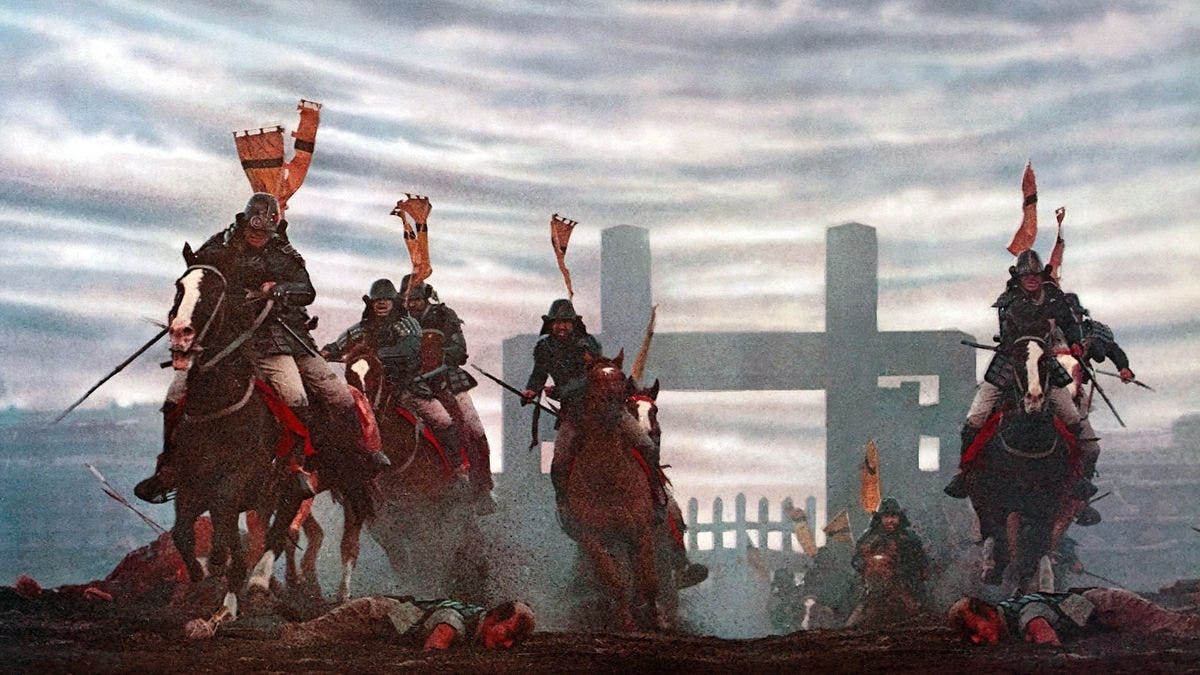
In high school, one of my English teachers was obsessed with movies. It was a really fun class, we read some great books, we watched some great movies, and we talked about some very interesting things. At the time, though, I definitely didn’t understand why he was teaching us that stuff or why it mattered. I just thought he was a funny, goofy dude, and I had a lot of fun in his classes. He was very into history and really into the English language, like any older white guy teaching English. But he was so obsessed with teaching us Japanese, a little too much because his wife was Japanese, but he was great at it. We watched RAN, a 1985 Japanese movie by Akira Kurosawa.
But we also observed and explored so much outside of these two cultures that he felt he was a part of. We explored the Igbo culture through the book Things Fall Apart by Chinua Achebe, San Francisco’s Chinatown in Joy Luck Club by Amy Tan (personal fav she explains brain aneurysms very well), and Indian pre-industrial society through the stories of Rabindranath Tagore.
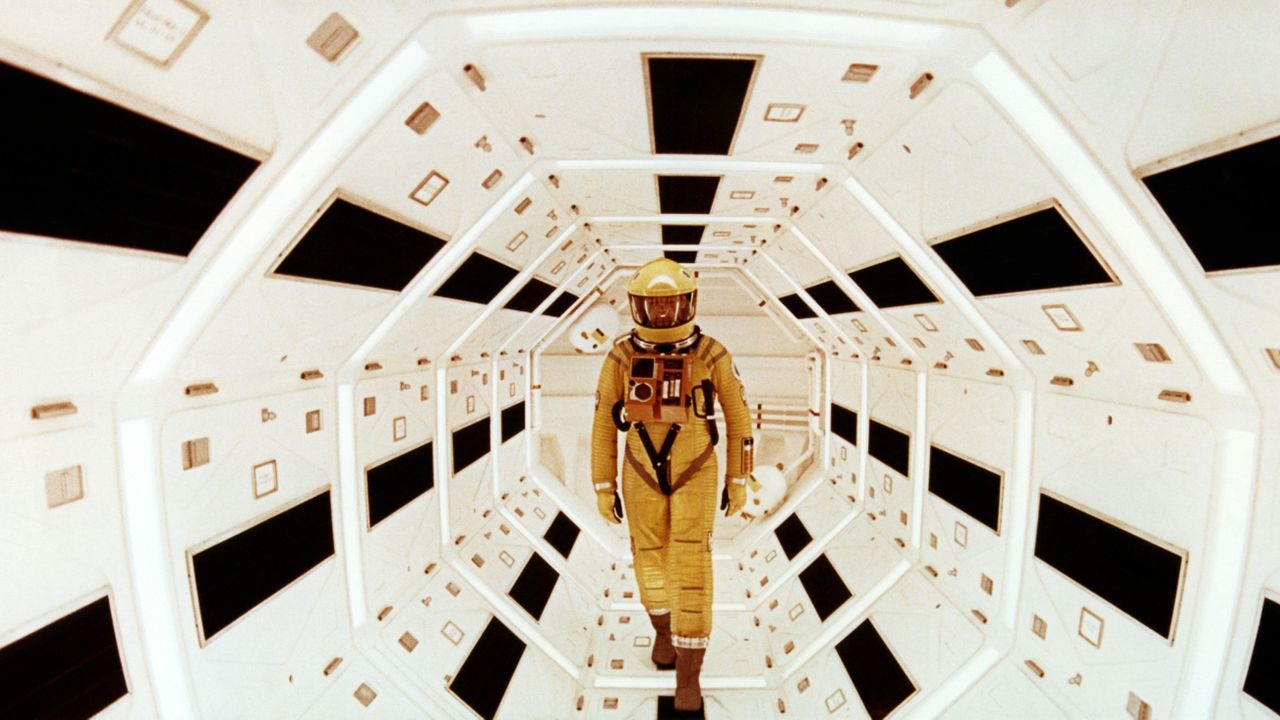
One of the movies we watched was called 2001: A Space Odyssey by Stanley Kubrik. Great movie, I highly recommend. It applies to a lot of the discourse around artificial intelligence today. Funnily enough, this movie was made in 1969, the same year that NASA landed on the moon. The movie is about a group of researchers in search of life on other planets. Really cool stuff, but the movie dives a lot deeper into some topics that I am not ready to discuss. It is a lot to digest.
At the beginning of the film, we are met with a group of apes and a group of boars hanging around each other on a prehistoric Earth. A second group of apes arrives at the watering hole they are situated at, and the two groups begin screaming at each other. The arriving group pushes the original group out of the watering hole through sheer intimidation, no violence. This scene is incredible and powerful, and succinctly depicted.
As a student in the field of anthropology, I appreciate the message that Stanley Kubrik had to offer with this scene in particular - our ancestors, apes just like you and me, fought tooth and nail with each other to survive. But here is where the movie gets interesting. Suddenly, the watering hole has dried up. In its place is a large, black obelisk of mysterious origins. As the apes awaken to witness and inspect this obelisk, they are drawn to its shape and design, they are enthralled with it completely. Eventually, every apes’ hand is touching this obelisk.
Fast forward. These apes are now scavenging through dead remains of animals that we saw earlier. As one ape begins to examine the bones, it seems to notice something about its shape, design, and its applicability in breaking the other bones. This is where the theme of the movie really comes in, to the sound of trumpets and violins in ovation. That piece of music is called Also Sprach Zarathustra by Richard Strauss (which translates to Thus Spoke Zoroaster/Zarathustra, an Iranian prophet).
Fast forward again, there is now a fight taking place between apes with bones and apes without bones. It begins as a screaming match, like before, but as one ape with a bone inches closer, he is charged by a monkey without a bone. Suddenly, he is struck, and then again, and then again. Other apes join in, and eventually, they drive away the rest of the apes that decide they would rather live.
That is the story of humanity. It is the story of you, whether you care to believe it or not. We all, at times in our lives, face adversity and are presented with two choices. Only two: act or do not. Many of us choose to act, many of us in ways we aren’t proud or happy with, but ways that we feel are just and fair. Many of us choose not to do anything, because we could simply care less, or we’ve been told it is better to focus on something else.
Navigating your own
I have faced this dichotomy for the past 8 years of my life. When I began high school, my sister had just finished college. I was determined to follow in her footsteps to attend UC Santa Cruz, but I always dreamed of a little more. In a letter to myself that I wrote in another English class, I wrote that I dreamed of going to Harvard or MIT. Why I chose those schools I can’t really explain. To be honest, I was a huge fan of The Big Bang Theory, and I’m not talking about the scientific theory (duh). But yea, I was also really fond of science, and I wanted to learn more.
Lots of my experiences during high school got in the way of that dream and eventually discouraged me altogether. I failed exams, got Cs in classes, had bad friendships, and I eventually lost my grandfather in 2020. It was the height of COVID, and he had gone to visit a friend around the same time that my family and I were traveling back from Southern California. We were attending a cousin’s wedding, and on the trip back I had a call with my grandfather in India.
We spoke as usual: “how are you,” “what are you doing,” “how are your friends and what are they doing,” and “what do you want for your birthday?” It was the middle of summer and my birthday is in January, so I felt unsure if he was speaking about my past birthday or my coming one, but I honestly did not want anything because I did not want my grandfather to put effort toward such a task. Whatever I wanted, I felt I could just get in the US and it would be easier than having him buy and ship it to my home.
While I spent the night wondering about what I wanted, on the other side of the world, my life was changing without my knowledge. My grandfather left home to visit a friend, and when he came back he fell. He hit his head and experienced a hemorrhage in his brain. I woke up to my father arguing on the phone with someone, and when I walked out I heard him say that he would ask me. “Ask me what,” I said, and he replied. My heart sank, but I responded honestly, “I don’t really know but I think it means bleeding in the brain.” That’s when he delivered the news that changed my life.
For weeks, I couldn’t sleep or eat properly. I barely remember the funeral or the various meetings we had throughout our summer of grief, but I do remember the grief. I remember the sobs of my uncles and father, but also the words of kindness that every member of my family, my friends, and my community had for us. I was determined to push forward, because he was the third of my grandparents to pass. By that age, I felt like I had experienced death more than anyone else I knew, so I didn’t know how to react or act. So I did nothing.
I observed others move forward in their lives while I decided to slow down on mine. Eventually, I moved on, but I never really confronted my feelings and the toll this death took on me. Years later, I began journaling again, something my grandfather taught me to start. I once asked him why he writes in so many different books and papers. He replied saying that writing was very important to him and it helped him remember things, and that if I ever felt that way I should write too. So I did.
I wrote everywhere. If you look at my music notes from middle school and high school, you’d think I’m insane. If you saw the things I wrote in my journal after I decided to confront my grandfather’s passing after my second year of college, exactly 3 years after his passing, you’d think I’m crazy, but based. And if you saw the things I wrote in my journal today, you’d think the same, but that I am just honest and hopeful.
I am hopeful for a better world, and a better tomorrow. I am filled with hope because I have met so many others with that same hope. Maybe not for the same passions or drives as myself, but for something greater. And that’s really all we need. Honestly, I have never believed in god, but I have always had faith in myself. So I want you to have faith in yourself. After all, we are all amazing and capable, and we all deserve everything that we desire. We may not be at the point in our lives to think “I am ready” for whatever we want. But we try, and that’s really all that matters.
What to do next
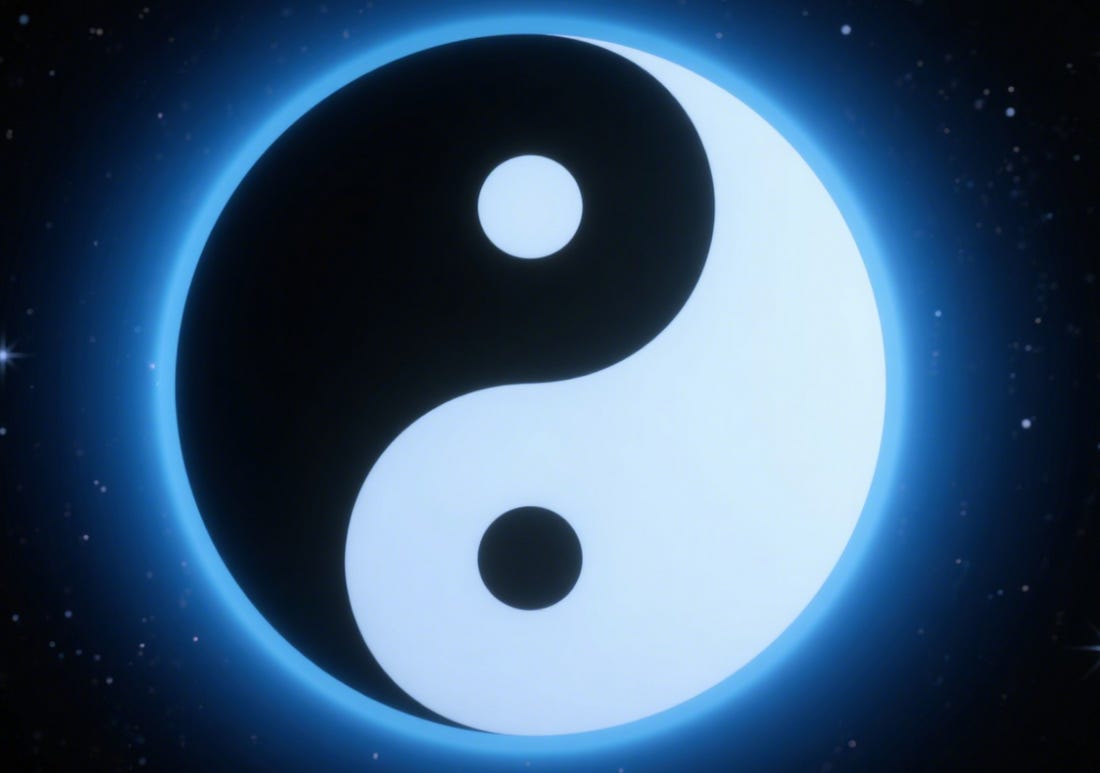
To conclude, my point is this - false dichotomies exist everywhere. We are constantly faced with the choice of doing something or doing something else. What we decide to do changes our lives forever, but it is so easy to look at ourselves and wonder, “where would I be if I had or had not done that?” It’s helpful to wonder, but it’s more impactful to just do. My fraternity’s motto is the Latin phrase Facta non verba, or “deeds not words.”
I love this phrase because of how much I align to its principle. Words are fine, but actions make progress. Words are helpful, but actions are creationary. Words are amazing, but we don’t always have the words for our actions. We do, however, always have the ability to act, and the choice is yours on how you choose to act. Believe in yourself, believe in the people who support you and care about you, and believe that there is something out there for you, and you alone. So reach out and grab it (but not forcefully).
Take care, and love yourself. Love others. Love the world. And above all else, have faith.
Jainam