
The Start of Authentistory
If you asked me 10 years ago what I wanted to be, I would have replied “an astronaut.” If you asked me now what I want to be in 10 years, I will reply “a physician, scientist, and engineer.”

Overcoming Mental Illness
I have been diagnosed with an anxiety disorder since I was 18 years old. Every day, I struggle with getting my own brain to function properly, and I want to show you what that means for me and how it relates to you. That is why I am starting Authentistory.
Authentistory is a combination of two words - authentic and history. Honesty is something I strive to live by every day, and history is something I like to learn. If you like to learn it too, you’ll have a good time reading what I planned for this page.
For now, I plan to write articles that dive deep on topics that interest me. Specifically, I will be writing about history, science, health, religion, anthropology, gaming, filmography, and music. It’s a lot, I know, but I love writing about different forms of art, technology, and media that no one really thinks about or wants to dive deeper on.
You can think of this blog as an investigative journal, and if you enjoy learning, you’ll fit right into my community.
Anxiety has ruled my entire existence since I was a child. When I was in 3rd grade, my house was broken into. Valuables were stolen, specifically devices that contained photos of myself as a kid. So personally, I don’t have a ton of accessible memories from this time. In psychology, I’ve learned that this is because I associate those years of my life with the trauma, and so I chose to forget those memories.
As someone with anxiety, I chose to study it further in college. I obtained my undergraduate degree from Case Western Reserve University in Neuroscience with a secondary major in Psychology. I also minored in Chemistry, which was really hard but very, very fun. Fun in the sense that I learned so much about the world around me because of my minor in Chemistry. Things I would not have originally known without such knowledge.
Why history and anthropology?
While I was in college, I took classes outside my major focus too. I took a Music class in the History of Rock and Roll, an Anthropology Class on Illegal Drugs and Society, and a Cognitive Science class in Human Learning and the Brain, among a dozen others. Having the ability to go to a private university, I abused my tuition to learn everything I could.
Recent events in my life and around the globe have made me realize that subjects like history aren’t taught the same way everywhere. I was in India a few weeks ago, and what I have learned about the world through the lens of Indian history is vastly different from what I know about the world through the lens of American history.
For example, here in the US, we view the world from a perspective of privilege that we believe we have over any other country in the world. However, that privilege exists among the elite in any country, not just the US or other Western countries.
The San Francisco and San Jose metropolitan area, aka the SF Bay Area, once had a GDP less than Chicago’s in 2012, and now it has the third highest GDP in the country, behind only New York City and Los Angeles. With a GDP of over $800B, this makes it more profitable than Belgium, which ranks 22nd in world economies. But if you look up the list, India is now 4th.
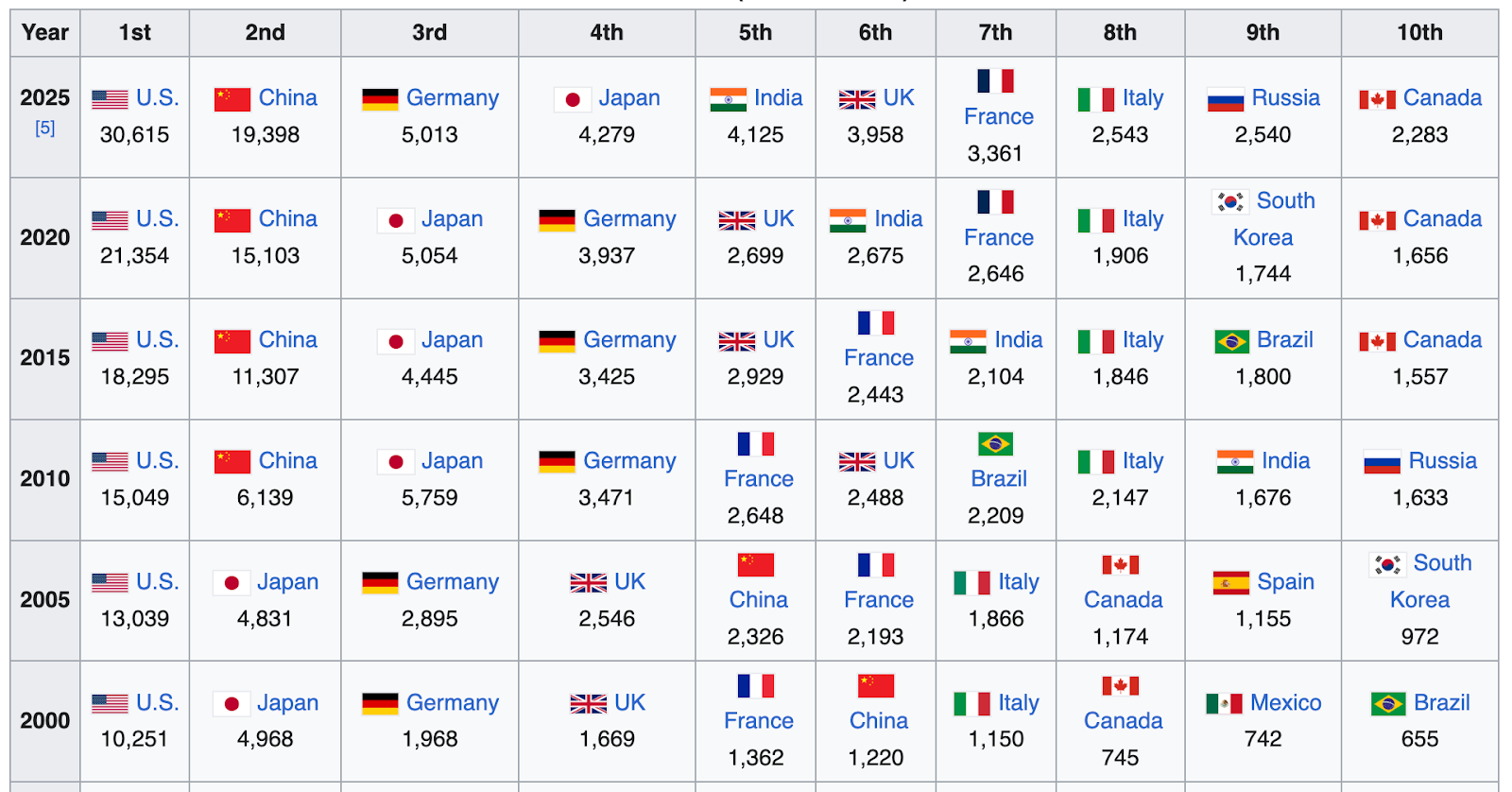
Table 1. Average Gross Domestic Product in Millions of Top 10 World Country Economies (Obtained from Wikipedia).
You can see India has steadily climbed this list which is dominated by other countries that are considered more developed to outsiders. The truth is that India has always been around but only recently entered the global market. One who views India from outside of India might think of India as a dirty, uncivilized third-world country; however, India is much, much more than it wants you to believe.
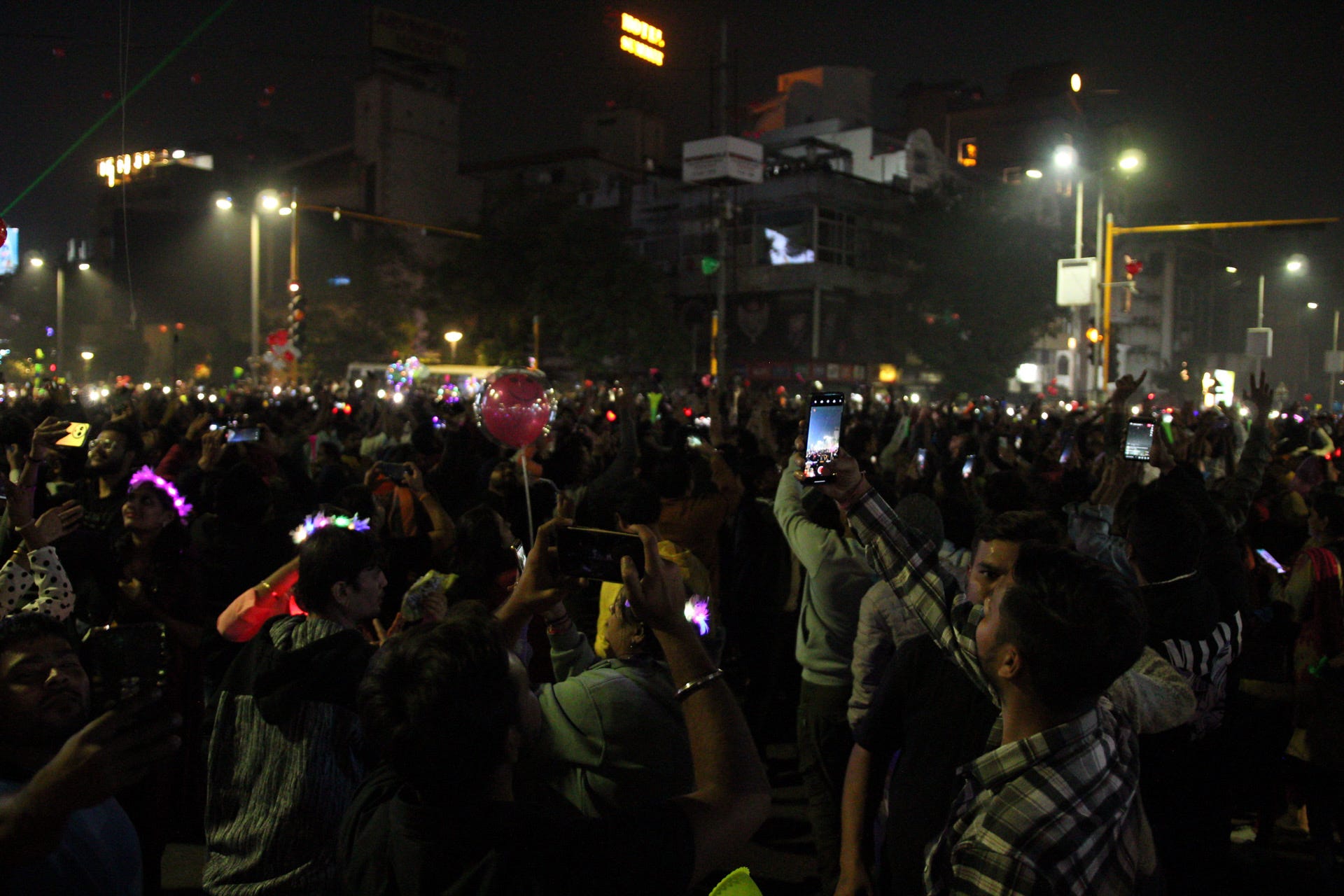
Image 1. 2024 New Year's Eve in Ahmedabad, with a population of 7.7 million.
So is the rest of the world. The Earth itself is over 4 billion years old (Manhesa, Gérard & Allègre, 1980). People exist all around the globe, and civilization exists wherever there is a people. History in most countries, however, reflects that country’s own history in comparison with the rest of the world - with that particular country coming out looking like they are above other countries. That is nationalism.
Unfortunately, nationalism means that information is taught very differently around the world and misinformation slips into every sentence of every conversation about history. I can’t do anything about that, but I can help write history moving forward. This site will serve to write the history of the students and professionals in fields that no one really talks about: linguistics, social science, and medicine.
I choose these fields because they are important to humanity and they are vital to the interplay between different countries around the world. While the world’s economy might revolve around money and math, the world itself revolves around science, faith, and language. Authentistory will serve as a community for students to talk about their cultures and traditions without judgement while we explore the mysteries of our backgrounds and heritage.
My hope is that, eventually, Authentistory will brighten someone’s day and push them to be a better person; not for themselves, but for those around them. In today’s age, we are often glued to screens whether we like it or not. We are consuming information almost constantly, and much of this information is useless to our everyday lives. But information processed in our brains repeatedly will eventually become ingrained. This is a process called long-term potentiation and long-term depression in neuroscience (Bliss & Cooke, 2011).
My practical goal is to de-influence you, provide you with accurate and reliable information, and utilize personal, anecdotal references to help you understand the world better. As such, you’ll see me link to resources like videos, articles, movies, songs, books, etc. You are welcome to view them and form your own opinions.
Background
Medical Anthropology and Health Data Sciences
Two emergent fields that are providing international analysis on health, anthropology and data science have actually existed for a long, long time. Humans have always studied other humans and why others behave and think the way that they do in comparison to themselves.
Neuroscience is nothing new either. History tells us that scientists have studied the human and animal brain for millenia. However, translational writing in these fields does not exist at a level for the average consumer to understand or access.
My aim with Authentistory is to provide translational writing and analysis on the sciences of the world and how they interact to produce life and illness. As a student pursuing medical school, my main goal is to provide accurate and up-to-date information about medicine and disease.
As a community, I want to create a forum where students like myself can talk about our illnesses and our experiences with medicine without judgement or anxiety.
A Pre-med’s Perspective
I am on a gap year between undergrad and graduate/professional school. My aim is to go to medical school and become a physician scientist. As a gap year student, I have a desire to explore myself outside of medicine. I decided a very long time ago that I wanted to become a doctor, but I always had outlets to other passions in college and before. Prior to high school, I was an athlete. After I got injured, I quit and focused on music. Once I got to college, I tried my hand at various things, but my favorite outlet was leadership.
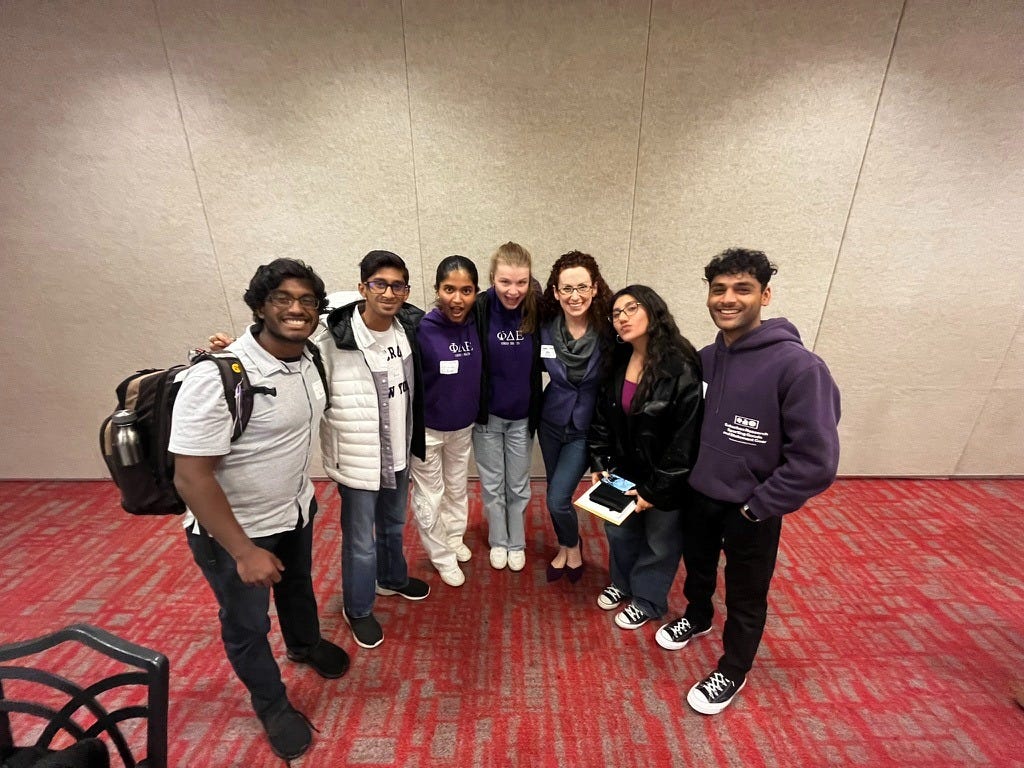
Image 2. Picture of Phi Delta Epsilon OH Delta Executive Board of 2024 (I’m on the far right).
I was a leader on my college campus, and I didn’t love the attention that came with it but I loved leading and setting examples for other students on the path to becoming a doctor. In May 2025, when I graduated, I felt completely lost in my life. I graduated with a 3.35 cumulative GPA and a 3.16 science GPA, which — to a lot of critics — is not good enough for medical school. Average GPA of a matriculant ranges between 3.4-3.9 for most schools, and what’s more is that average MCAT ranges from 509-525 for most accepted students. And I have taken the MCAT 4 times.
I’ll get into why my GPA is low and why I have multiple MCAT attempts another time, but even though I seemed like I was working hard as a leader on campus, I was struggling academically. Truth be told, I was doing too much - I was volunteering, I was working part time, I was studying for school and the MCAT, I was leading a fraternity, I was conducting independent research in a wet lab, and I was learning to be my true self. I had no time for myself to process what I was learning.
I was spreading myself thin, and because of it, I ended up failing exams, missing important classes, and losing points in class for dumb mistakes. I took the MCAT 4 times because I never felt happy with my score, thinking I could easily score higher if I put myself in the right mindset.
So when I graduated last May, I didn’t feel like I was ready to jump into application season for medical school. I took some months off and thought I would give the MCAT another shot. My first scored attempt, which I took in January 2025, I got a 512. This is a great score, but being on the lower end of accepted students’ data, I felt like scoring higher would give me an edge if I ended up applying to medical school in the future.
I took my next attempt in August 2025, a few months after graduating and spending my summer both studying and enjoying my newfound freedom in life. I got a 510 on this attempt. Realizing I hit a plateau, I decided to schedule my next exam for 6 months later, in January. I spent days and nights studying and memorizing information and practicing. And then I received a 502.
The August attempt shook my already weak confidence given I was unemployed and in debt from my undergrad degree. I felt crazy, considering I had great practice scores and felt confident on my own. But a few days before my January attempt, I had a panic attack. I had run out of my anxiety medication and had a fight with my family. That moment further broke me, and I ended up psyching myself out on my third attempt, scoring a 502 because I forgot key content when I needed it and even fell asleep during the exam.
These are the stories about my life that no one but I will tell you.
It is important that you know, because if I want to build a base of supporters and scholars, I need you to trust me when I say this: tests do not determine your life, and outside reviews do not invalidate the truth. What do I mean by that? Many writers, myself included, tend to give our opinion where it is and isn’t needed. However, I am only one person with one perspective and one life. My life could be completely different from yours and we can still connect on one or two things. And so my truth being true does not invalidate your truth being true. Both can be different, and both can be true. (Read my last article about “False Dichotomies” if you want to learn more).
So from me to you, don’t ever let a bad score or evaluation make you believe that something you want is not meant for you. More specifically, if you are a pre-med like me, never let a bad moment rethink the medical pathway. Time, support, patience, and perseverance are qualities that you have and will need if you are going to go down that path.
Reconnecting with myself, and what I will do next
In India, I had another panic attack. I was arguing with half of my family on different topics, and I was off medication. I felt like Zoloft was ruining my mood and so I decided to stop taking it before leaving for India to see if I could live without it. I love India, and I love visiting my family.
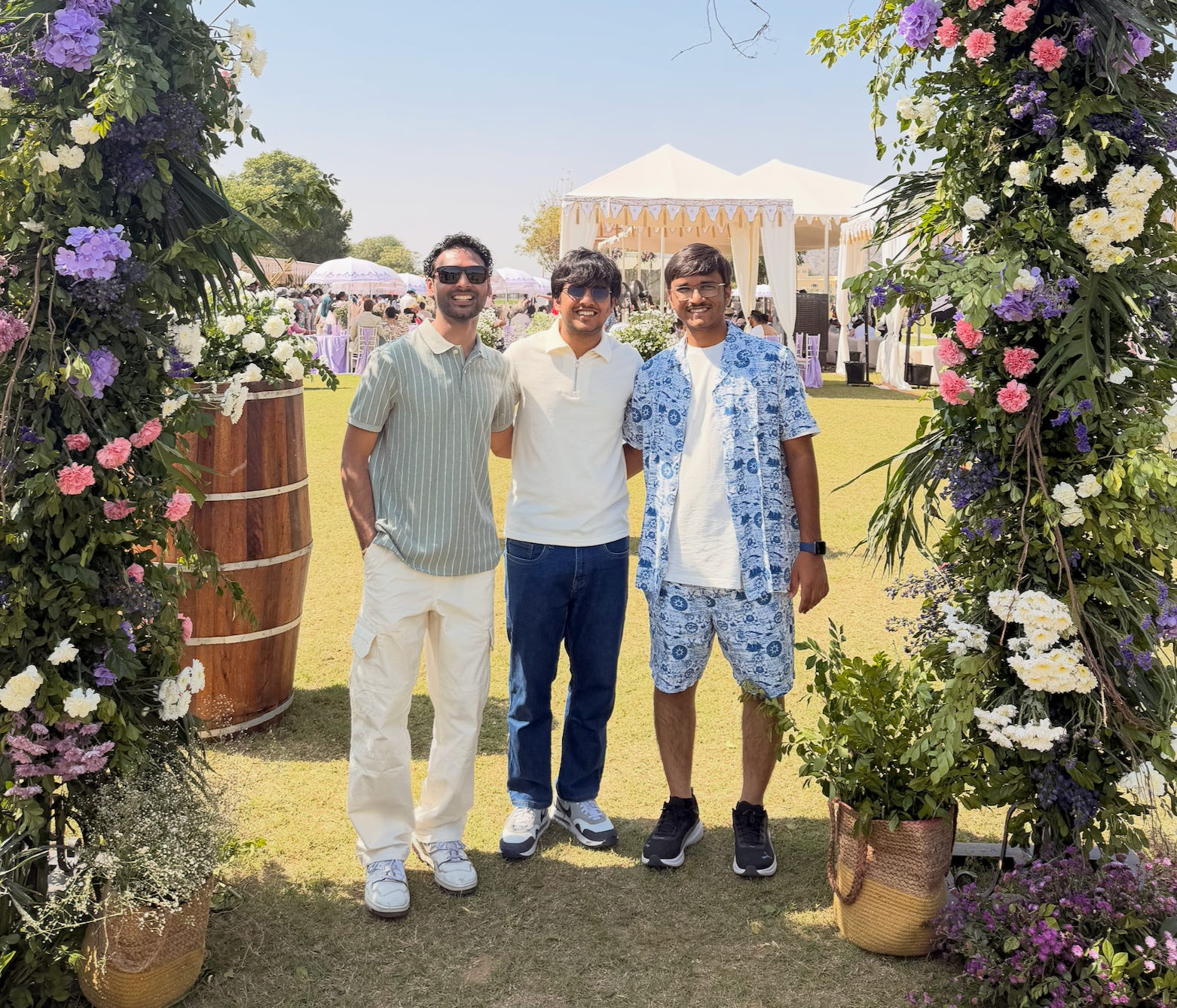
Image 3. Me and my cousins at my brother-in-law’s brother’s wedding at Mandota Palaca in Jaipur, Rajasthan.
I was very happy to be with family and exploring my parent’s home country, but triggers are triggers. I had another anxiety attack and my family called an uncle of mine who is an anesthesiologist. He took me to a psychiatrist, who prescribed me the right medication for my anxiety.
My diagnosis was startling for my family and my new doctors. But to me, it was nothing new, I’ve known since I was very young. I have experienced general anxiety since I was in 3rd grade. That year, 2012, my mother was picking me up from my elementary school, and when we returned, we found our house had been broken into. In the 30 minutes between my mom leaving and us arriving at our home, someone had rummaged through every closet and cabinet to steal our valuables.
Ever since, I experienced anxiety attacks in various, high-pressure situations. Auditioning in front of a whole band, for example, or when giving a speech to a room full of dozens of other premeds. Anxiety, however, does not control me as much as I make it seem. I am fully aware of when I get anxious, and I have great coping mechanisms. As a student studying and conducting research in neuroscience and psychological sciences, I learned a lot about abnormal psychology, neural circuits, and nervous system dysfunction. To me, anxiety is a part of my life whether I like it or not, so I have learned to cope with it.
It has been a few weeks since I started my new medications, and while I feel better, I have also been in somewhat of a fugue state. Medications help one get back to normal, but beyond that, becoming happy again is something that is up to the individual. For me, pursuing my hobbies makes me happy. But for someone like me, my hobbies aren’t something I consider “work.” And for that reason, I never want to make it my work - I consider being a pre-med, becoming a medical student, and becoming a physician to be my career.
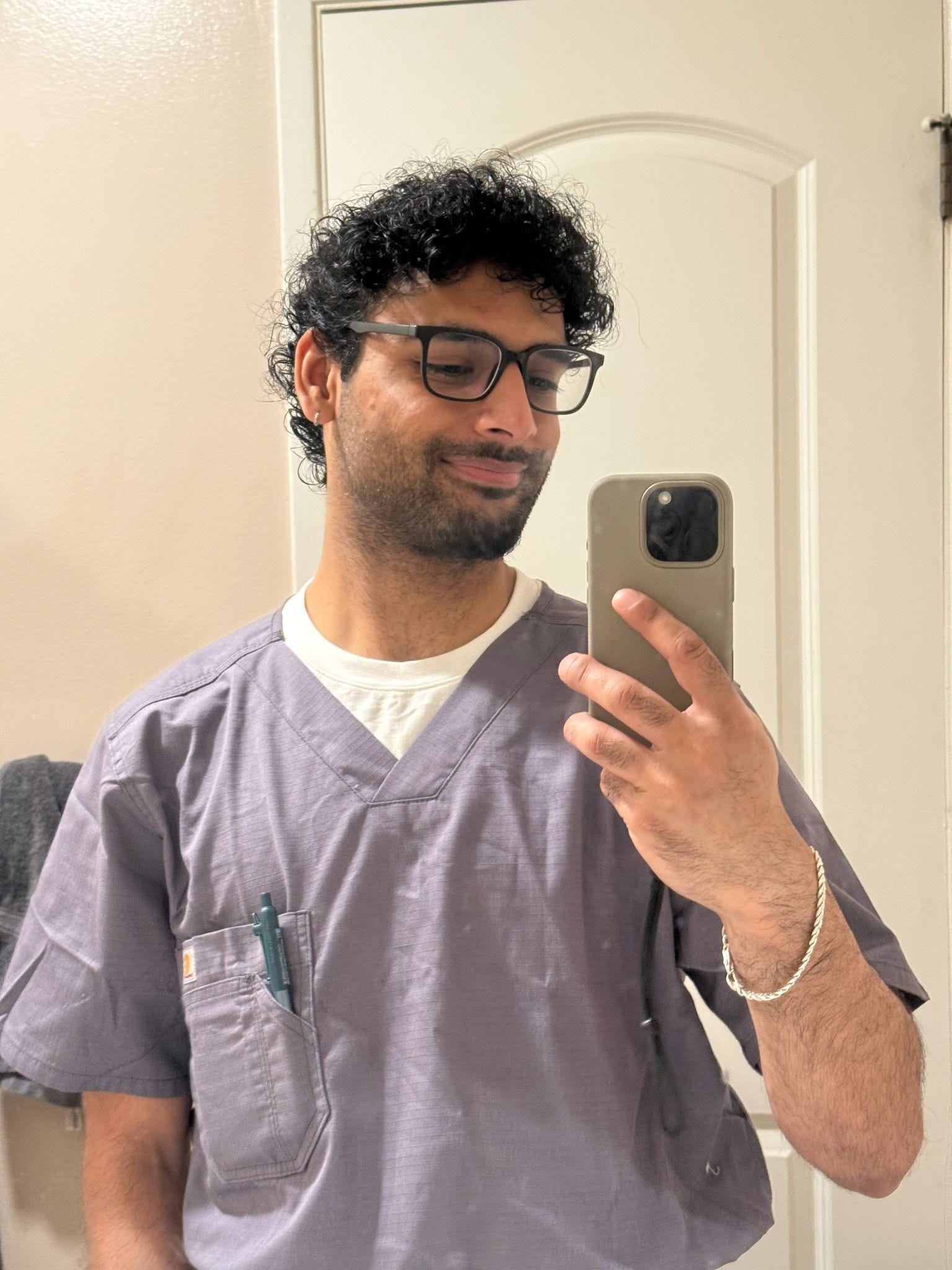
Image 4. Myself in scrubs prior to my first rheumatology rotation for my medical assistant certification.
That said, I do want to pursue all my aspirations, both career and personal. To that degree, one of the passions I have is for research. Independent research is something I started conducting, not in college, but in high school. With a few friends in 2020, I started a website called mediminds.org. At first it was meant to be a blog where the three of us wrote about the world from the lens of neuroscience and psychology to educate our community on something we felt was important to teach. Mental health, the effects of COVID-19 on the body, and the institutions of racism and discrimination within the US. We wrote many articles integrating science, law, bioethics, philosophy, and data science.
Today, that website has grown, and I want to return to my roots, so I am starting Authentistory. I want it to be a space where students like myself can be free to talk and laugh about our mistakes, teach others about our lives and the trajectories we aim to pursue, and maybe make the world a happier and healthier place. I want to create a community of complete honesty about the science and history behind us as humans and our fields.
Discussion
What is Authentistory really?
Right now, Authentistory is just me. I plan to write articles and publish videos and podcasts exploring the fields of history, etymology, anthropology, and medicine. They are subjects that intrigue me that I personally don’t know enough about, so I want to learn more about them. As I learn, I want to share my findings with you, because the more I teach, the better I learn.
I want to eventually expand to allow other students to write and submit their own stories and research. I want to create a community of dialogic and interdisciplinary study that can translate the jargon into action.
Below, I will detail a few of Authentistory’s objectives and guidelines.
Aim - Uplifting the world and liberating the mind.
Motto - Communication and action create change.
Key Tenets:
Truth, Inclusivity, Investigation, Resource, Compassion, Trust, Dedication, Education, Aid, Faith
What will Authentistory do?
I’m thinking 10 steps ahead, but I plan to build an educational program for translating hard scientific research and data analysis into actionable ideals for people to improve their health and wellbeing. As such, my main mission is to uplift and liberate others from their ailments.
What that means for Authentistory practically is that, for now, I will continue writing and spreading the truth about matters that matter to me and other students. Eventually, I hope to scale this venture into a multimedia platform that lets students write their own stories, create their own communities, and create change.
What that means for you, whether you’re a student, researcher, worker, or anything else is that this will be a space for you to learn something you don’t understand without feeling like you don’t have the ability to learn more. You’ll learn by reading others’ perspectives, communicating your own experiences, and filling in gaps in your knowledge without judgement.
Why me and why now?
I have been through a lot and witnessed even more, and from what I have seen, heard, and experienced, I have so many stories to share. Others in my position do too, but we don’t necessarily have a platform where people can easily see what we’re thinking and what we believe. I used to write for Mediminds as my outlet to shed light on mental illness, neurological disorders, and living conditions around the world.
For me, my mission will remain the same with Authentistory, but I want to enable other students to share their stories, experiences, and thoughts too. I want to dive into linguistics and anthropology to show you that science and faith are not just words but deeply revered and established institutions that govern our world. And from there, I want to uplift students, professionals, and everyone in between to do the things that they want to do, when and where they feel they are needed.
Authentistory will be a platform for students, academics, professionals, and members of our community to be a part of a movement toward educating the world around us in our chosen fields and beyond. I am a student on the surface, but deep down I am already a scientist. I love learning, and if you do too, join me by subscribing to continue reading about what I and other students have to say about our world.
Conclusions and Future Directions
Living with Brain Disorder
To conclude, I have a story I want to share with you that will give you an idea about my next article, which will be about code-switching and living with a neurological disorder.
While I was in India, I relearned how to speak my family’s native language - Gujarati. It is very difficult to learn and speak when your primary language is English and you live in the US, where very few people know fluent Gujarati. But I know how to learn other languages and I have always enjoyed learning other languages, so learning Gujarati comes naturally to me whenever I have others around me to speak in Gujarati with.
You might feel like this if you are also bilingual or multilingual. Something about switching between one language to another makes me very bad at expressing my thoughts as quickly as I wish I could, and so I stutter or take my time to speak. Sometimes, I’ve been called out on it.
When I was in India, I felt pretty good about my ability to speak Gujarati. One night I was standing outside a church at the reception of my brother-in-law’s wedding, and a man asked me a question in Gujarati but I was not sure if he was speaking to me. I responded, stuttering and speaking in broken phrases, and he asked me if I was on the groom’s side. After I replied yes, he laughed and joked about how I struggled to respond in Gujarati.
I laughed with him, but later I thought about it a lot. I have faced struggles in speaking my native language and connecting to my native culture my entire life. As a kid from another culture living in a country of mixed cultures, I have heard from family members and everyone around me that I am not a true Gujarati. It has always put a suppressive impression on me in terms of speaking in Gujarati and connecting to my culture.
I prefer English because I can speak it much more fluently, but sometimes I speak in Gujarati just to get my point across. Because, sometimes, saying something in its original language just means more. I’m sure you must feel this way too, if you speak another language. If you do, you’ve found your community. Authentistory is a place where we can, together, uplift others like us and create change. But remember this:
Be careful about what you say and how you say it. It can make all the difference in the world.
For Authentistory, if you’ve noticed, I wrote this article in a very particular format. This is how traditional research is written in scientific journals. I aim to make Authentistory more of a casual journal for academics that want to learn more but not go to the lengths of reading hardcore research articles in publication journals. To make this more of a casual journal, I plan to include more multimedia like references to movies and art, links to articles, songs, and playlists, and my own photography of the world around me.

Image 5. Jaipur’s Amer Mahal (Amber Fort and Palace) garden and Maotha Lake
I have lots of my own media to share, but I prefer to share what already exists for now. So here is a list of movies I think are extremely important to watch to understand my point of view and the reason I am starting Authentistory. If you connect with any of these films, have any thoughts to share, or want to add to the list, feel free to reach out to me.
MOVIES TO WATCH TO LEARN ABOUT HUMAN THOUGHT AND BEHAVIOR:
Interstellar by Christopher Nolan
2001: A Space Odyssey by Stanley Kubrick
RAN by Akira Kurosawa
Uncut Gems by Benny and Josh Safdie
Wake Up Dead Man by Rian Johnson
Two for the Money by DJ Caruso
Good Will Hunting by Gus Van Sant
Pain Hustlers by David Yates
Fall Guy by David Leitch
Memento by Christopher Nolan
If you want to see more of the movies I have watched and share your thoughts, follow my letterboxd @jnamshanam. For more of my photography, follow @jnamshanam on Instagram.
Peace ✌️